
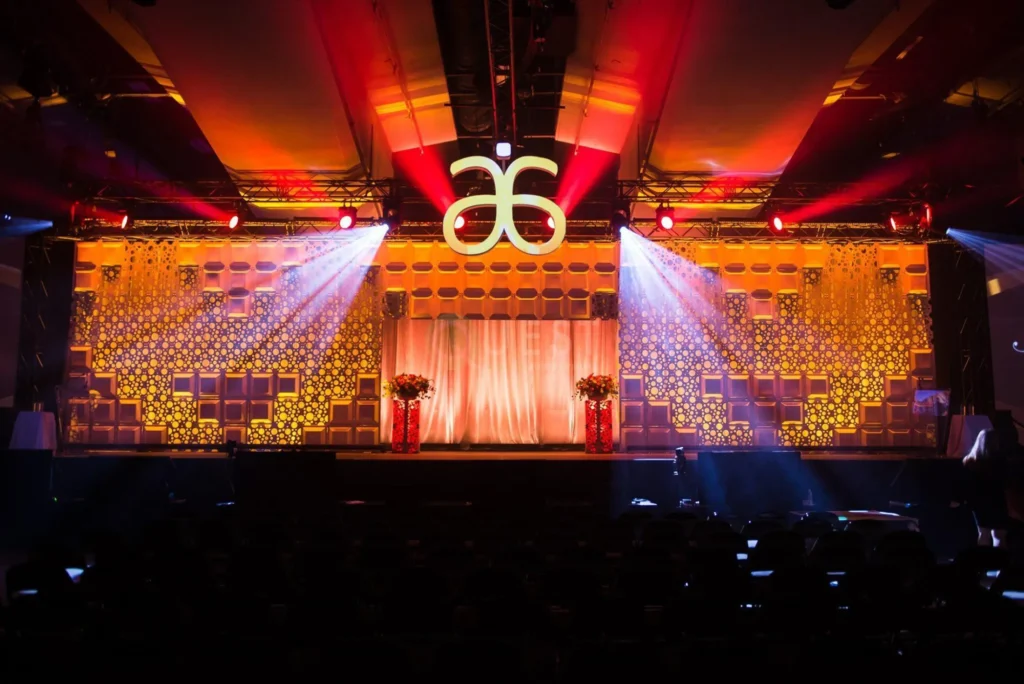
THE PSYCHOLOGY OF LIGHTING AT EVENT
Lighting is often described as a technical layer of event production, but in reality, it is one of the most powerful psychological tools available to planners and producers. Before a presenter speaks a single word, lighting has already influenced how the audience feels about the room, the brand, and the message they are about to receive.
Human beings respond emotionally to light. It affects mood, attention, trust, and even memory retention. In corporate environments, where clarity and perception are everything, we plan for lighting design to be intentional, not incidental.
Setting the emotional tone is important. It is known that colour temperature plays a significant role in shaping emotional response. Warmer tones create a sense of intimacy and approachability. They are often ideal for fireside chats, executive panels, or recognition moments where connection and authenticity matter. Cooler tones, on the other hand, can evoke focus, energy, and modernity, making them effective for product launches, innovation summits, or forward-looking keynote presentations.
Beyond colour temperature, saturation matters. Deep brand colours projected across a room can foster pride and cohesion during internal events. Soft ambient washes can reduce anxiety during high-stakes investor presentations. Lighting subtly tells attendees how they should feel, whether that’s inspired, reassured, energized, or reflective.
Lighting is also a tool for visual hierarchy. In a ballroom filled with scenic elements, screens, decor, and audience tables, strategic contrast guides the eye exactly where it needs to go.
A brighter stage against a dimmed audience ensures focus remains on the speaker. Accent lighting on architectural features can elevate the perceived sophistication of the space. Highlighting a product reveal with a shift in intensity or colour creates anticipation and drama.
These shifts do more than look impressive, they support cognitive processing. When attention is clearly directed, audiences absorb information more efficiently. When lighting is flat or inconsistent, distractions increase and engagement decreases. We use lighting in this way, to help support communication strategy, making it an extension of the content itself.
So why exactly is a well-designed lighting plan important? Consider this: the use of incorrect lighting angles unintentionally undermine a brand, or poorly represent a speaker on stage. It can result in shadows across a presenter’s face, mismatched colour temperatures on camera, or uneven stage wash can subtly reduce perceived professionalism.
Well-designed lighting, however, enhances credibility. Even, flattering key light ensures speakers look confident and authoritative. Balanced fill light minimizes harsh contrast, particularly for hybrid and recorded content. Consistency in brand colour across stage, scenic, and digital platforms reinforces visual identity.
In today’s environment, where events are often captured, livestreamed, and shared, lighting must serve both the in-room audience and the camera lens. The psychological impact extends beyond the ballroom to anyone watching remotely. The importance of good lighting has trickled its way down from the corporate stage and into the hands of every social media influencer in the form of a ring light.
Creative lighting also helps support energy flow throughout the day. Corporate events are rarely static. They move through different phases: registration, general session, breakout discussions, networking receptions, and celebrations. Lighting should evolve with the agenda.
Morning sessions may benefit from brighter, cooler lighting that stimulates alertness. Midday transitions can incorporate subtle shifts to re-energize attendees. Evening receptions often call for warmer, more atmospheric tones that encourage conversation and connection.
These transitions don’t need to be dramatic to be effective. Even gradual changes in intensity can influence how long attendees remain engaged. Lighting, when programmed thoughtfully, helps manage the natural energy curve of a full event day. This is precisely the reason we always engage our clients in conversations around lighting changes throughout their event.
Ultimately, lighting is not just about visibility, it is about experience design.
Attendees may not consciously comment on the temperature of a stage wash or the precision of upplight placement. But they absolutely feel the difference between a room that has been thoughtfully lit and one that has not.
When lighting aligns with brand messaging, supports content delivery, and enhances emotional tone, it elevates the entire production. It transforms a standard corporate gathering into a curated experience.
For event professionals, the takeaway is clear: lighting should be brought into the planning conversation early. It should be treated as a strategic element, not a last-minute add-on.
Because in the world of corporate events, perception is reality and lighting shapes perception long before anyone takes the stage.